Protest or Pop Culture: The Socio-political Power of Slogan T-Shirts
In contexts of injustice, the t-shirt has often been a space of political and emotional communication. When symbols, imagery and text are placed on an item of clothing, the body becomes a site of expression. Through historical protest movements, such as anti-war campaigns, punk subculture and aids activism, the slogan t-shirt has become increasingly visible in mainstream fashion and digital culture.
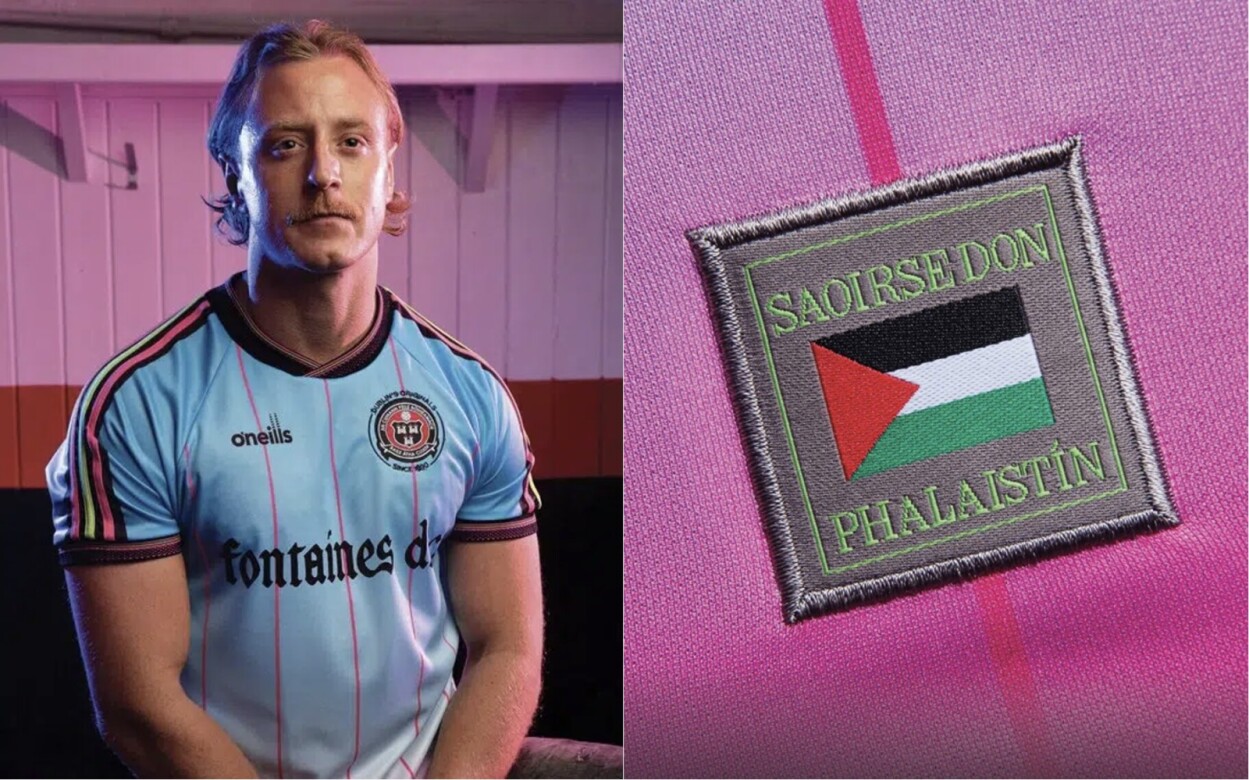
This thesis analyses what socio-political activist slogan t-shirts reveal about the commodification of protests through three case studies from contemporary social movements. The Protect the Dolls t-shirt for trans rights illustrates how social and political messaging is amplified through online visibility, while simultaneously being absorbed into fashion cycles that risk diluting urgency into aesthetic trend. Fontaines D.C X Bohemians F.C jersey for Palestine aid demonstrates how collaborations between sport, music and activism can mobilize support and global awareness yet also raise questions about the role of branded merchandise in mediating political solidarity. Finally, the REPEAL sweatshirt for the repeal the 8th amendment campaign exemplifies how locally embedded protest symbols can foster collective identity and affective change, while later becoming political artifacts that circulate beyond their original context.
Through these case studies, this thesis analyses how slogan garments such as t-shirts, jerseys and sweatshirts operate within current socio-political contexts. Drawing on theories of subcultural style, semiotics and clothing as communication, this research examines how political meaning is constructed, circulated and changed when activist messages are displayed on the body through clothing and reproduced within commercial markets.
These examples reveal how meaning shifts through celebrity culture, social media, hashtag activism and slacktivism. Furthermore, the comparative analysis reveals similarities such as recurring tensions between resistance versus commodification and authenticity versus trend of the garment. The research ultimately argues that while the slogan t-shirt remains a significant symbol of resistance, solidarity and identity, political power is shaped by digital visibility and contemporary consumer culture. In the words of designer Katerine Hamnett (1984), known for her political slogan t-shirts, “legendary tees were like a double-edged sword” as “perhaps they gave the impression that something had been done when it hadn’t.
Finally, the REPEAL sweatshirt for the repeal the 8th amendment campaign exemplifies how locally embedded protest symbols can foster collective identity and affective change, while later becoming political artifacts that circulate beyond their original context.
Through these case studies, this thesis analyses how slogan garments such as t-shirts, jerseys and sweatshirts operate within current socio-political contexts. Drawing on theories of subcultural style, semiotics and clothing as communication, this research examines how political meaning is constructed, circulated and changed when activist messages are displayed on the body through clothing and reproduced within commercial markets.
These examples reveal how meaning shifts through celebrity culture, social media, hashtag activism and slacktivism. Furthermore, the comparative analysis reveals similarities such as recurring tensions between resistance versus commodification and authenticity versus trend of the garment. The research ultimately argues that while the slogan t-shirt remains a significant symbol of resistance, solidarity and identity, political power is shaped by digital visibility and contemporary consumer culture. In the words of designer Katerine Hamnett (1984), known for her political slogan t-shirts, “legendary tees were like a double-edged sword” as “perhaps they gave the impression that something had been done when it hadn’t”.