My name is Hayley Hughes. I am in final year of Creative Industries and Visual culture in TUD Grangegorman. For my thesis, I decided to study sexualization in music videos as I’ve always had a profound interest in the music industry. I started dance when I was seven years old so my interest came from this as dance is heavily used as a visual tool in music videos.
‘Skin Gets Views’ Challenging Empowerment and Objectification in music videos in 2026
The evolution of social media platforms and shifting cultural perspectives on representation have turned music videos into complex visual texts. The value of exposure has grown because of the transition from MTV's broadcast dominance to YouTube's algorithm-driven environment, establishing attention as an asset in the music industry. Concerns of empowerment, objectification, and ownership over the artist's image have been raised (Laura Mulvey, 1986. Judith Butler, 1990. John Berger, 1972) regarding sexualised imagery, especially nudity, which has persisted as a strategy used to make viewers interact and a topic of critical discussion.
This research is based on feminist theory, particularly Judith Butler's idea of gender performativity and Laura Mulvey's concept of the "male gaze." Through these lenses representation in music videos can be seen as a staged performance shaped by cultural and commercial expectations rather than a clear declaration of identity. Within this context, the body is transformed into a location of significance through repeated visual codes linked with femininity, sexuality, and visibility across a range of controversies. Following her 1992 appearance on Saturday Night Live, Sinéad O'Connor revealed how political disagreement may lead to backlash and loss in industry support. In contrast, artists like Miley Cyrus in her music video “Wrecking Ball” (2013) have been able to turn controversies surrounding spectacle and sexualisation into long-term financial success.
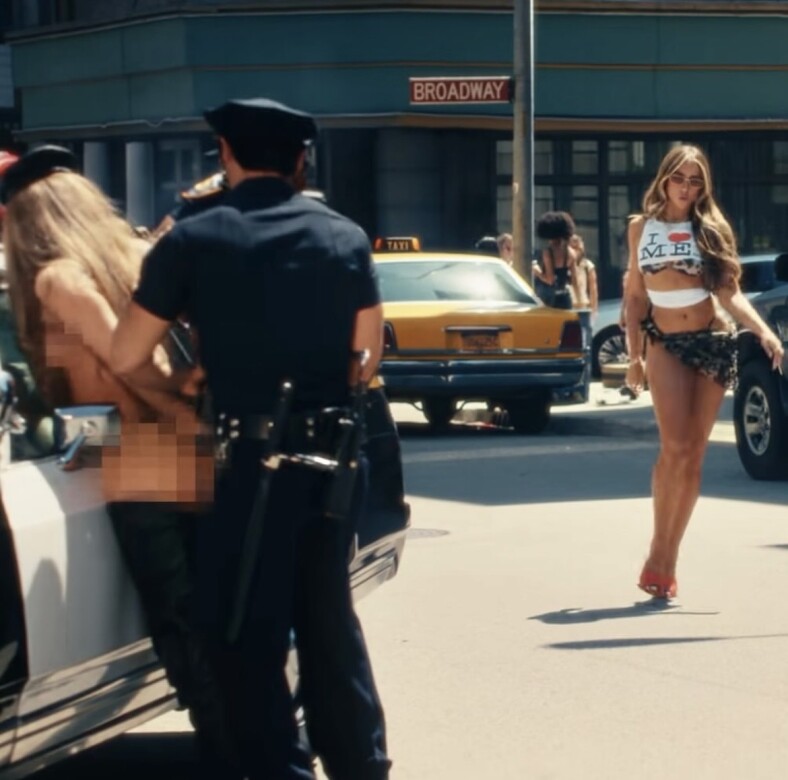
Empowerment and objectification are difficult to distinguish in modern music videos, because they can coexist within the same visual language. Viewers often feel uneasy with nudity and see it as a marketing strategy. But their viewing habits indicate that they still find ways to relate to the material they condemn. Although sexualised material is widely considered as overused, survey results show that it continues to attract attention and repeat viewing. This creates a tension between what audiences say and do. Viewers may oppose sexualised representation in principle, yet they contribute to its circulation by watching, sharing, and discussing music videos online. This engagement promotes visibility on digital media, regardless of whether the replies are positive or negative. The continued use of sexualised images in music videos (“Its ok, I’m ok” Tate Mccrae, “Taste” Sabrina Carpenter) reflects creative or artistic decisions, but also the needs of a media environment in which attention is privileged. The relationship between visibility and the display of the body reinforces the idea that could be called ‘skin gets views,’ making it difficult to differentiate between empowering representations and those that function through objectification.