I'm Alannah Bascoul Keegan, a fourth-year Visual Communication student at TU Dublin. My work is driven by an interest in politics and feminism, specifically how both manifest in everyday life in ways that often go unexamined.
I enjoy working across editorial design and print, combining digital and analog processes. I'm most drawn to outcomes that have a physical presence; publications, objects, things that require the audience to engage with them directly rather than passively.
This year's projects reflect both of those interests: one is a typographic publication exploring apathy and compassion in contemporary media culture; the other is a boxed field kit designed to be unpacked, arranged, and read, containing printed sheets, acetate overlays, and a booklet that guides the viewer through the work.
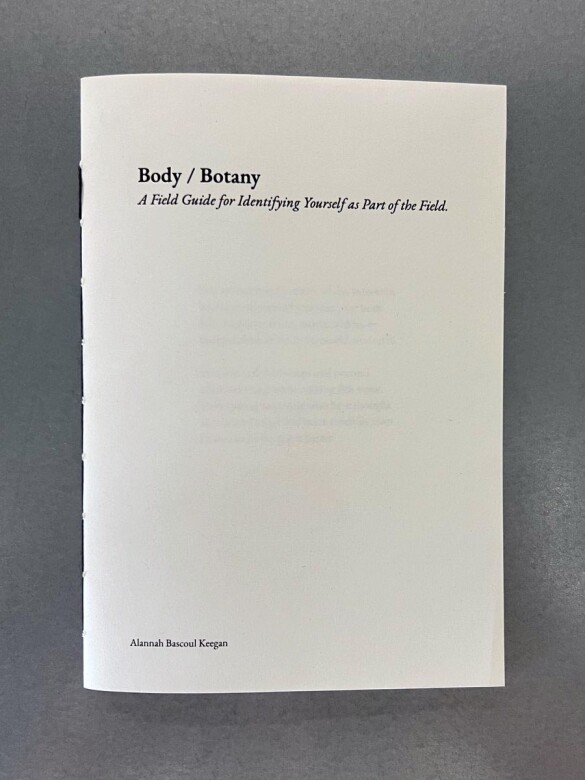
A Field Guide for Identifying Yourself as Part of the Field
A Field Guide for Identifying Yourself as Part of the Field is a multi-format design project exploring the entanglement between humans and the natural world. It takes its structure from the field guide and inverts it; the reader is not an observer standing outside nature; they are a specimen inside it.
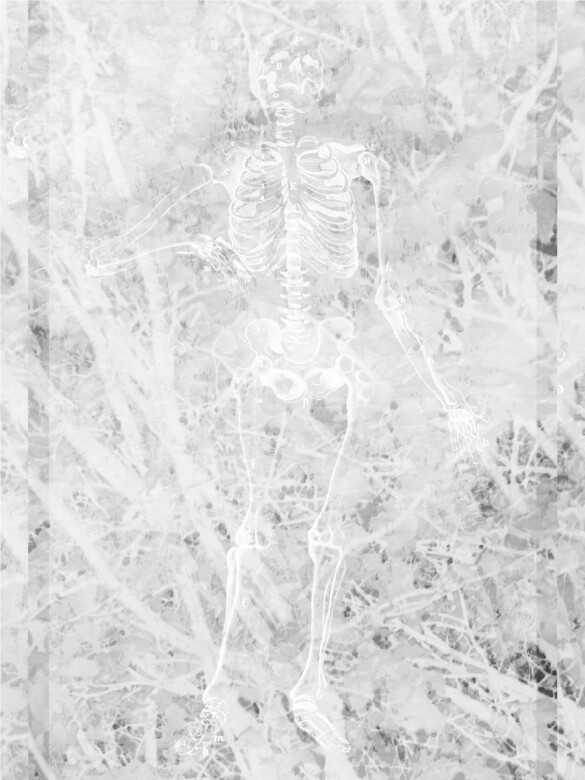
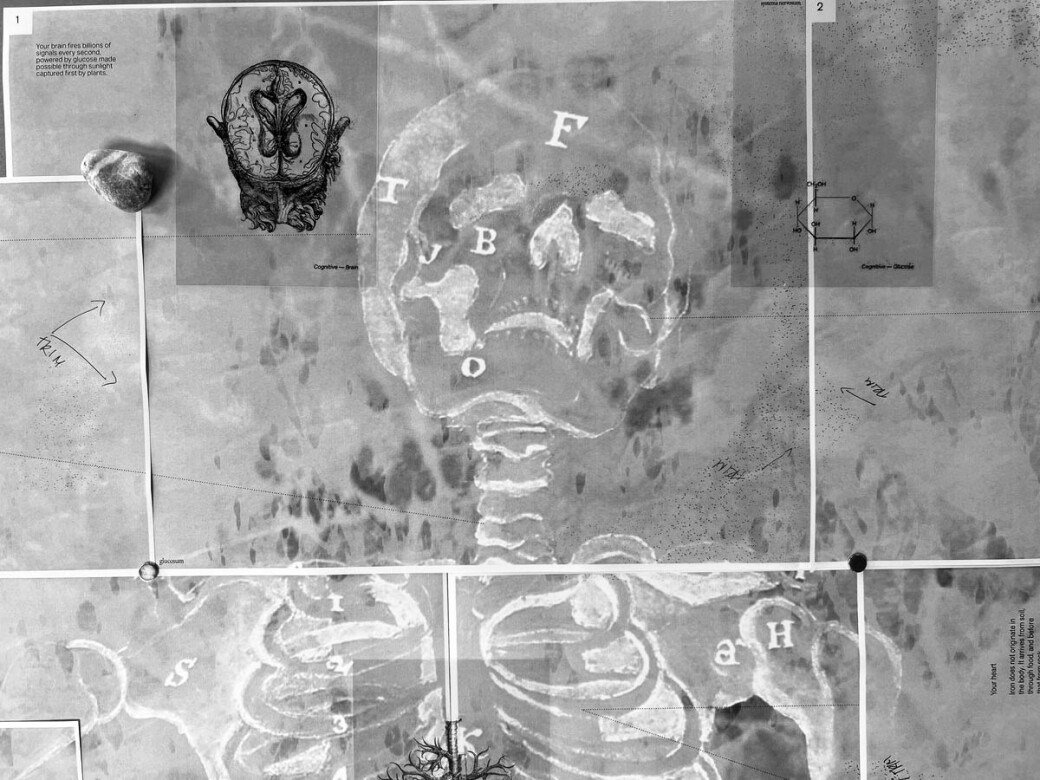
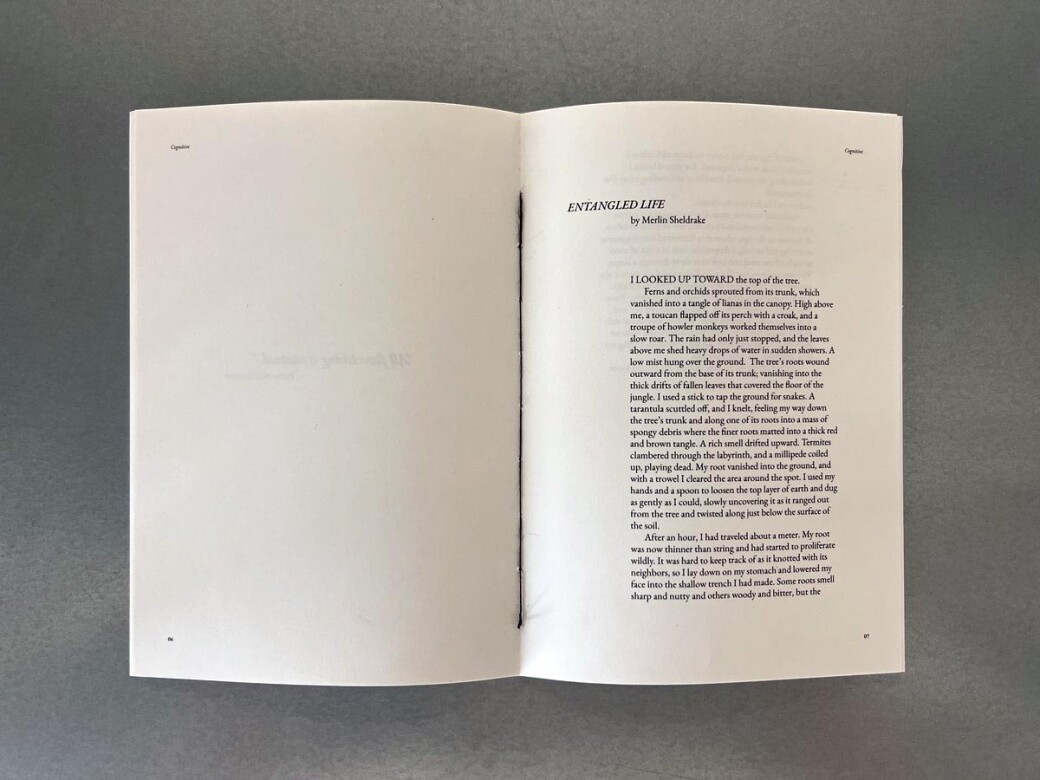
The project comes in a box. Inside: a booklet guiding the viewer through the reasoning; empathy, dependency, and the biological connections between human and plant systems. Loose sheets are assembled by the viewer into a large diagram: a human skeleton overlaid onto root and mycelium networks, annotated like a natural history specimen, with acetate overlays adding further layers.
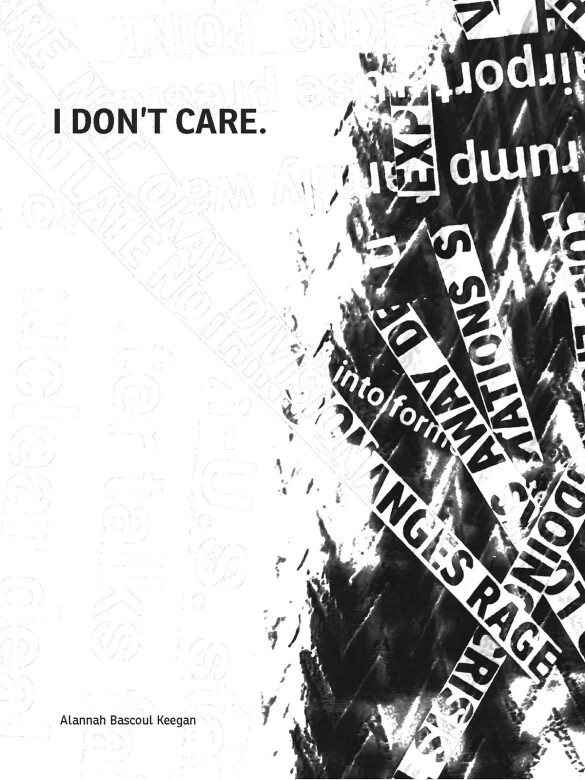
I Don’t Care
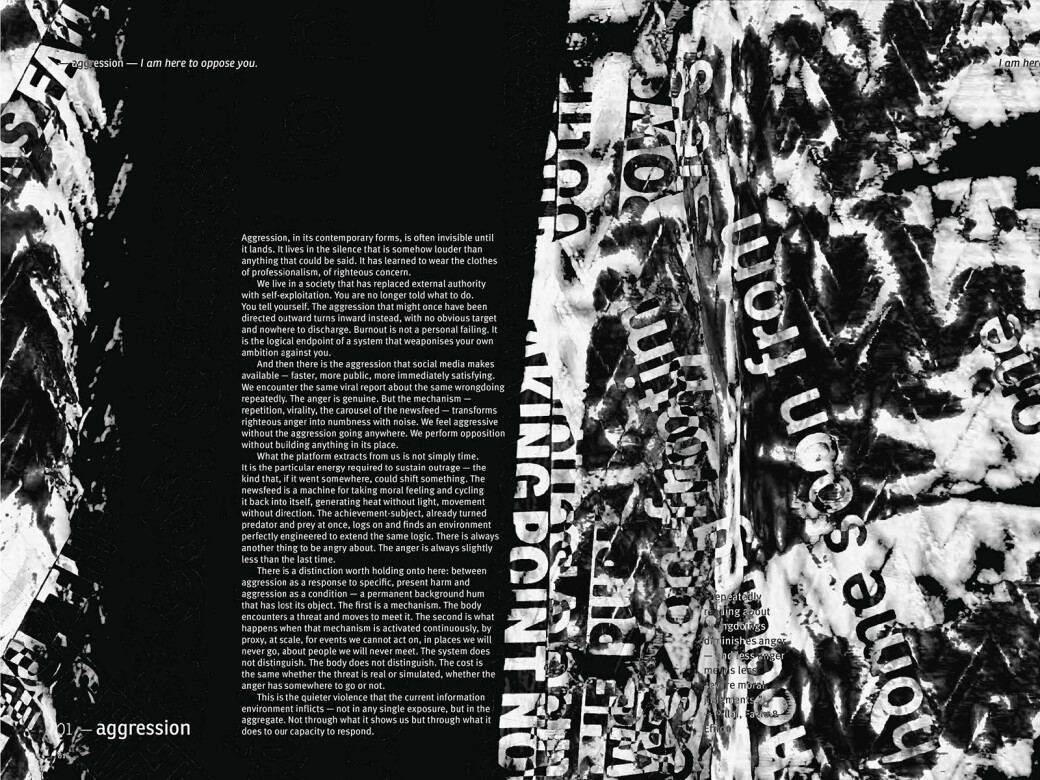
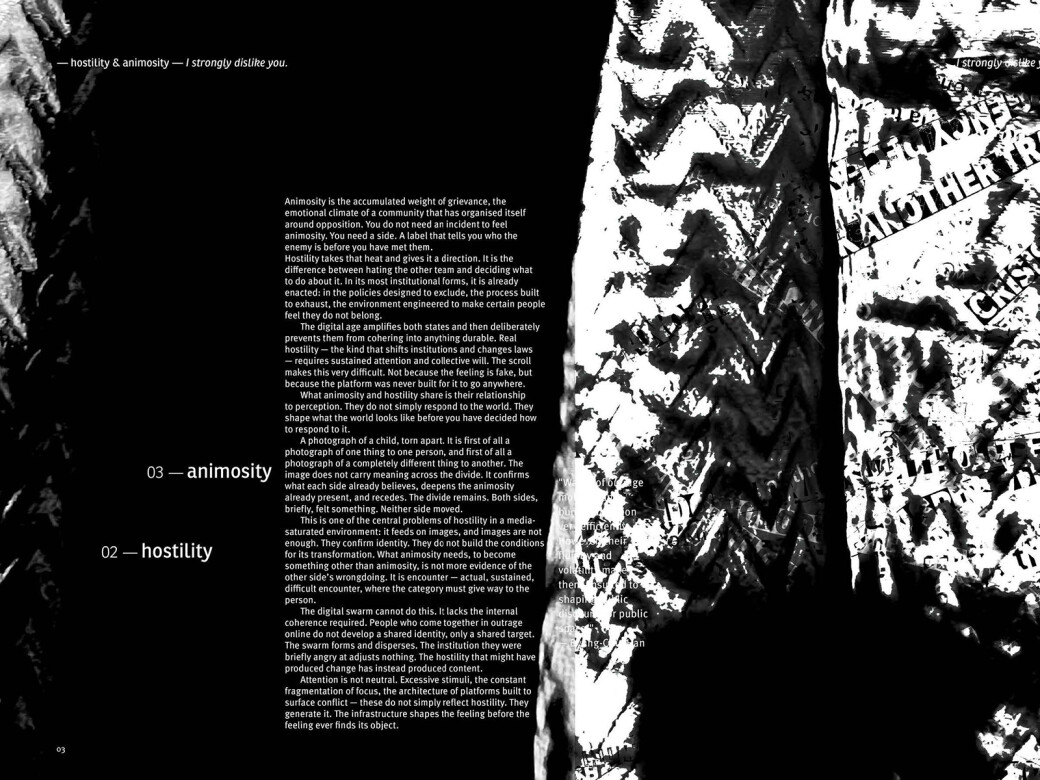
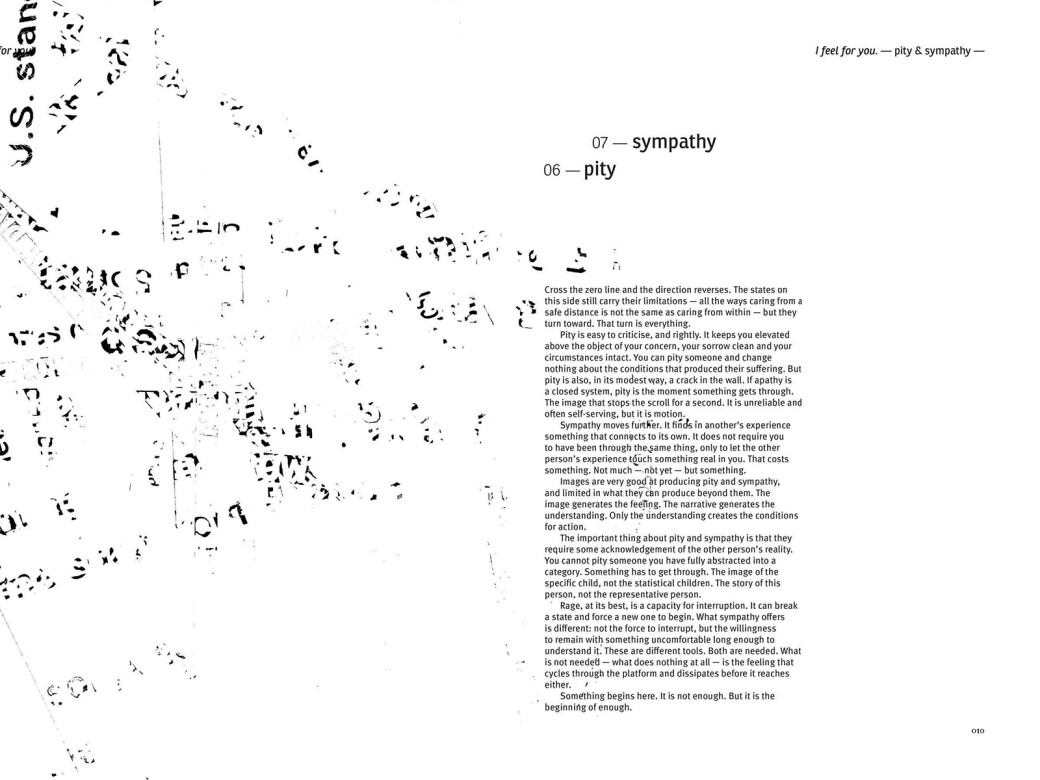
Don't Care is a typographic publication exploring how contemporary media culture produces apathy. Structured around the Aggression–Compassion Continuum, the publication moves through nine psychological states, from aggression at one extreme to compassion at the other, with apathy as the still point at the centre.
Typography is the primary expressive tool. The early spreads use scanned, cut, and layered news headlines to perform the density and disorientation of the media environment. As the publication progresses toward compassion, the visual language opens, the page clears and the type breathes.
The publication draws on Byung-Chul Han's diagnosis of the achievement society, bell hooks on love as political practice, and Susan Sontag on the limits of images. It is designed to be a head-clearing experience: a physical object that makes the condition it describes visible, and offers a way through it.