My name is Orla and I am a visual communicator based in Dublin. My work is often rooted in themes of Irish identity, culture, and reconnecting with land and nature. Much of my practice explores Irish folklore, mythology and the ways language and place shape our understanding of both personal and collective identity. I have always been deeply inquisitive with a strong eye for detail, problem-solving and research, qualities that continue to shape my creative practice today. I am particularly drawn to research-led design across both print and digital spaces, using typography, image-making, tactile and interactive formats to create thoughtful experiences that encourage reflection, curiosity and deeper attention to the world around us. I see design as a cultural and communicative practice that shapes how we understand ourselves, our history and our environment. I am interested in using it to foster awareness, connection, and meaningful engagement.
Aduantas
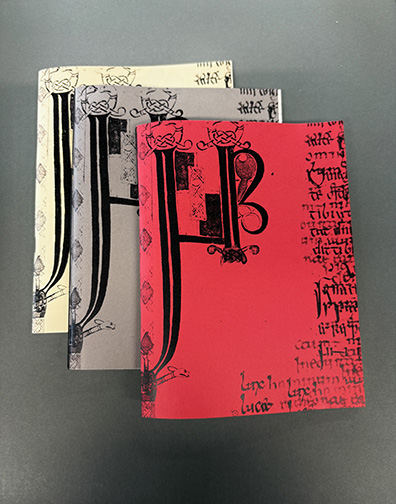
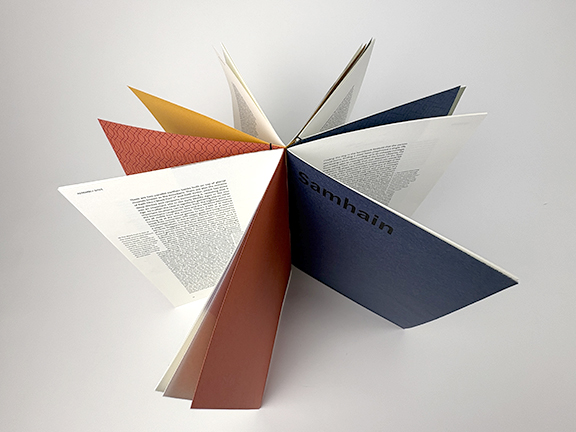
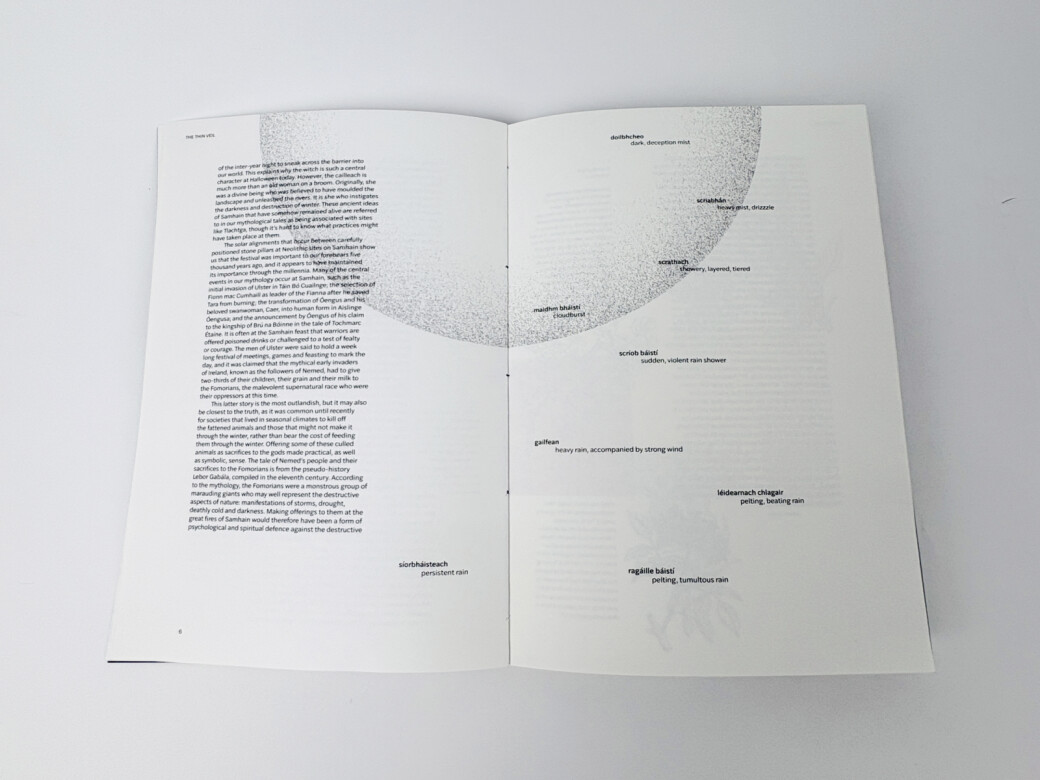
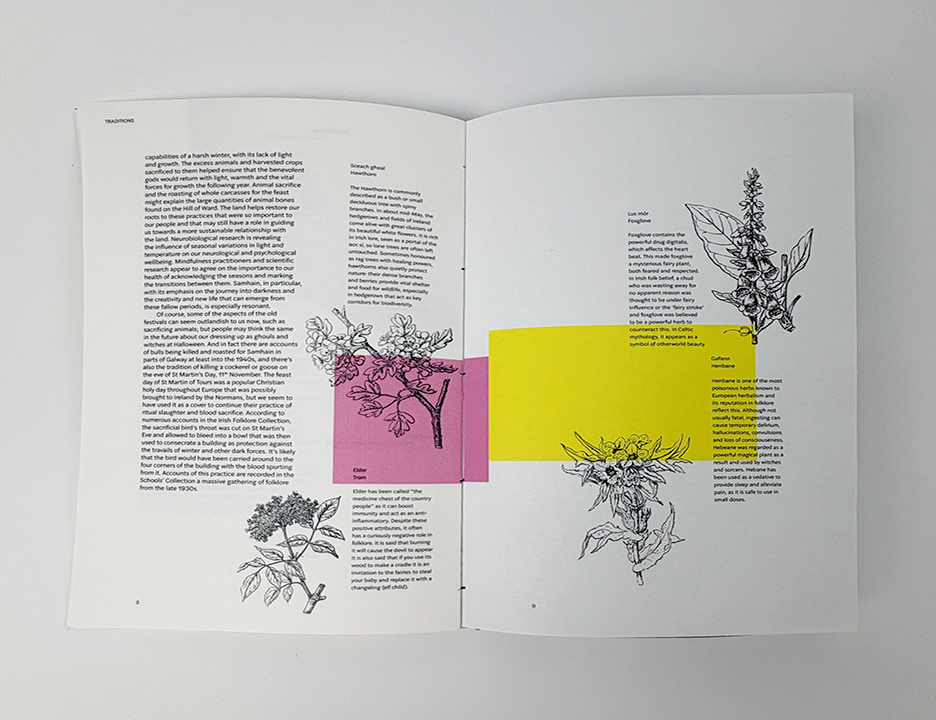
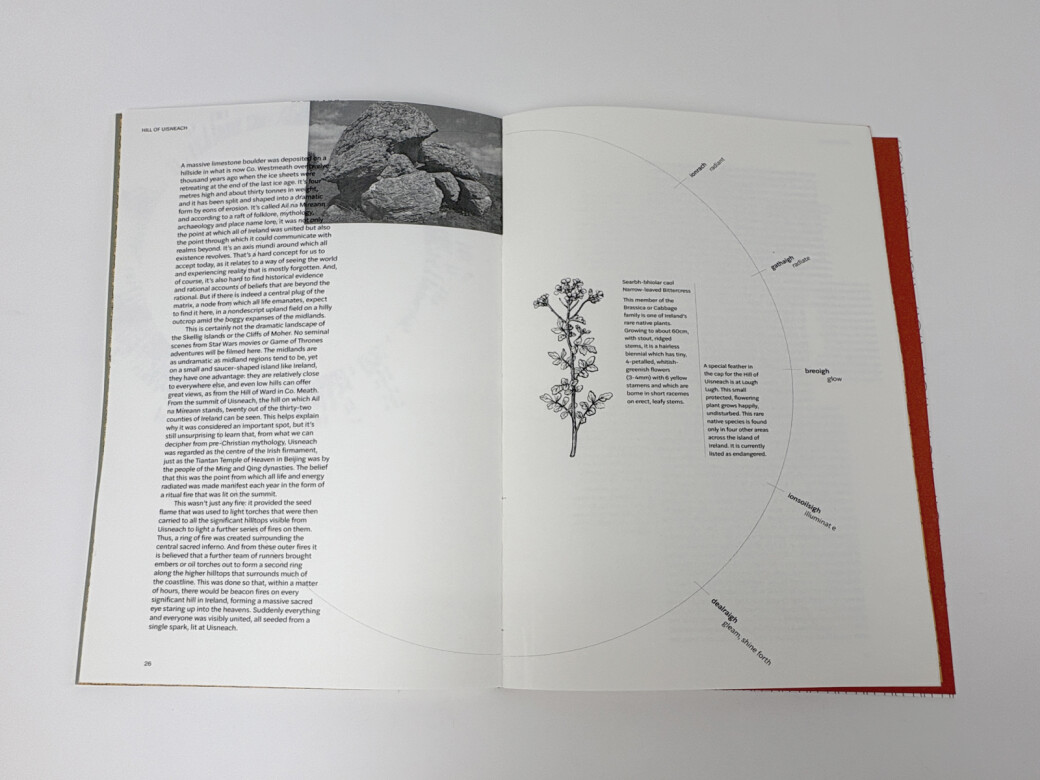
This publication explores how Irish land, language, mythology and identity have been shaped by the natural world. Responding to what the Environmental Protection Agency describes as an “age of disconnect,” it examines how contemporary life has weakened attentiveness to nature and seasonal rhythms. Drawing on Irish words for weather, folklore and Manchán Magan’s writing, the project investigates older ways of understanding place through language, weather, ritual and cyclical time. Structured around the Celtic Wheel, the publication is divided into four modular booklets based on the Irish fire festivals of Imbolc, Bealtaine, Lughnasa, and Samhain. Each reflects a key seasonal shift, from renewal to harvest to descent. Together, they form a circular whole that reinforces continuity and seasonal return. The project aims to reconnect audiences with the land by encouraging greater attentiveness to the cultural and environmental systems that have shaped Irish identity.
Féar Gorta
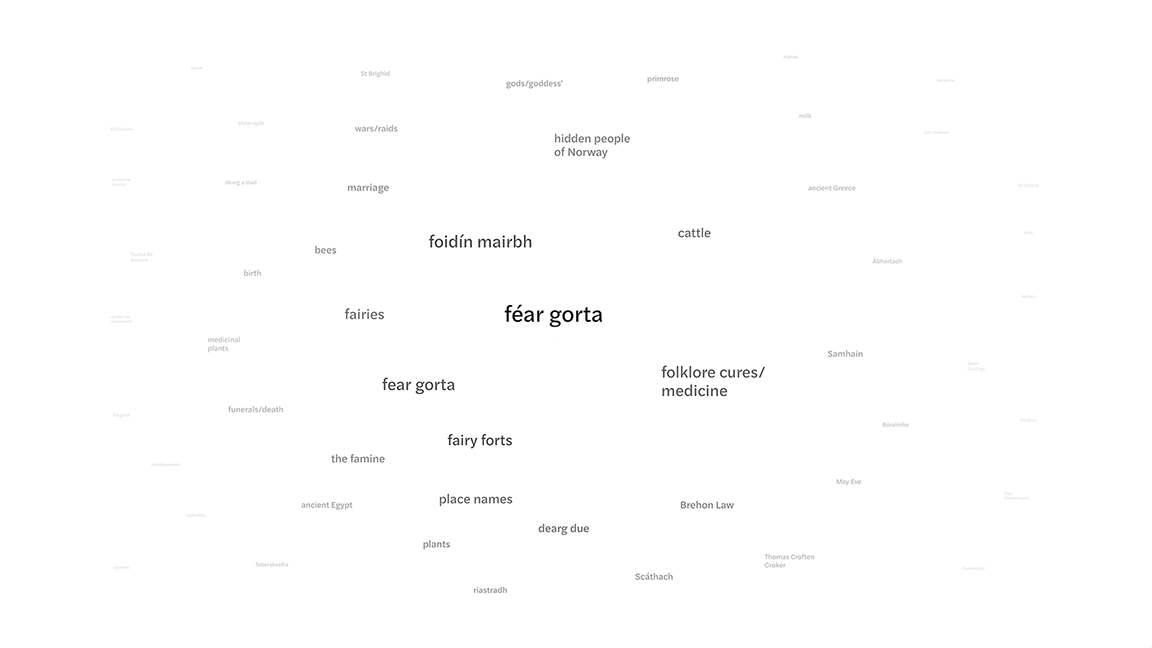
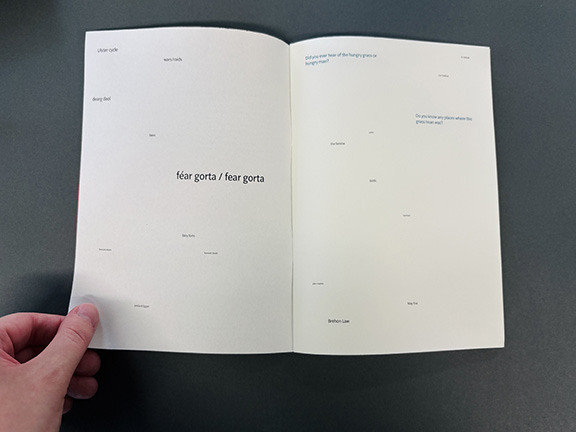
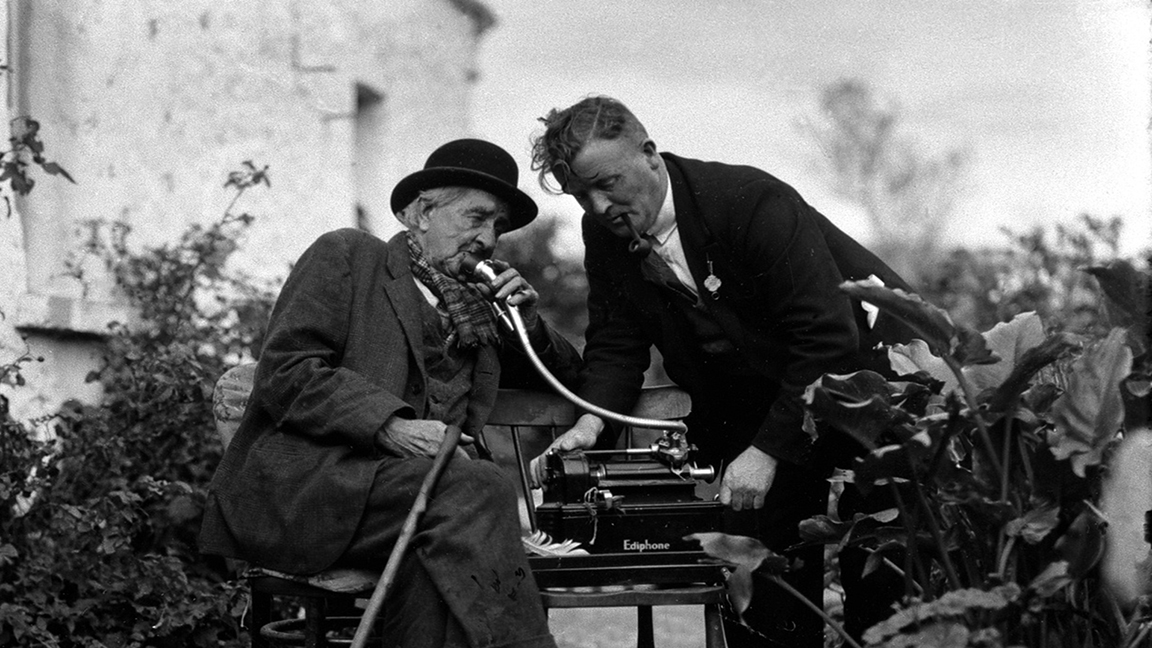
This project explores the National Folklore Collection, one of Ireland’s most significant cultural archives and part of UNESCO’s Memory of the World register. While platforms like Duchas.ie make this material widely accessible, folklore can often become fragmented, categorised or disconnected from the deeper linguistic, historical and cultural contexts that shape its meaning. This project reimagines the Collection not as a static archive but as an interactive system of relationships, investigating how meaning is constructed through connections between language, place, interpretation and cultural memory. Beginning with the féar gorta / fear gorta as a case study, it examines how folklore can shift through language, transcription, translation and literary retelling, where even small variations can significantly reshape understanding. By mapping connections between stories, themes and shifting interpretations, the project aims to reveal folklore as something living and evolving, highlighting how narratives are continuously reinterpreted and remain culturally relevant over time.