I’m Wade Claassen, a Visual Communications graduate. Born in South Africa and living in Ireland for the past decade, I’ve found myself blending these two identities in my design. My passion for discovery and understanding drives all aspects of my work, and I aim to create pieces that invoke this in my audience.
I focus mainly on illustration, typography, and isotypes, using these to explore themes of identity, memory, belonging, and wider topics such as politics and environmentalism.
Biological Deserts of Ireland
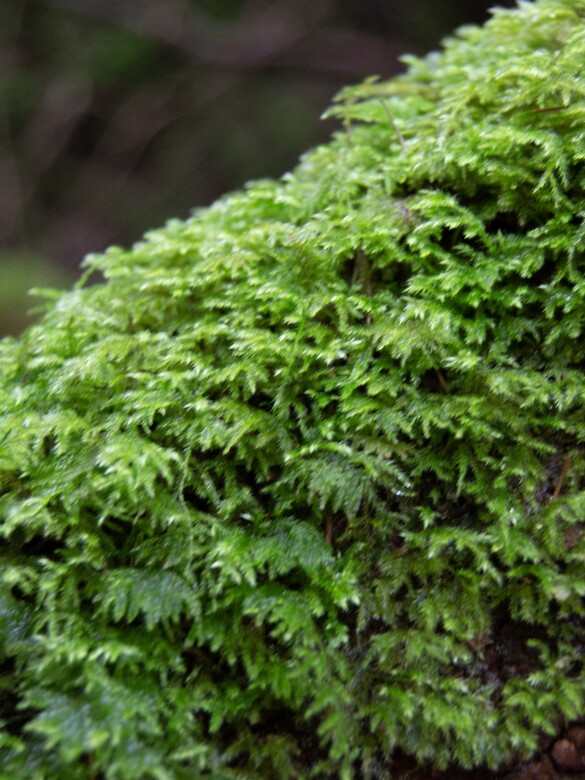
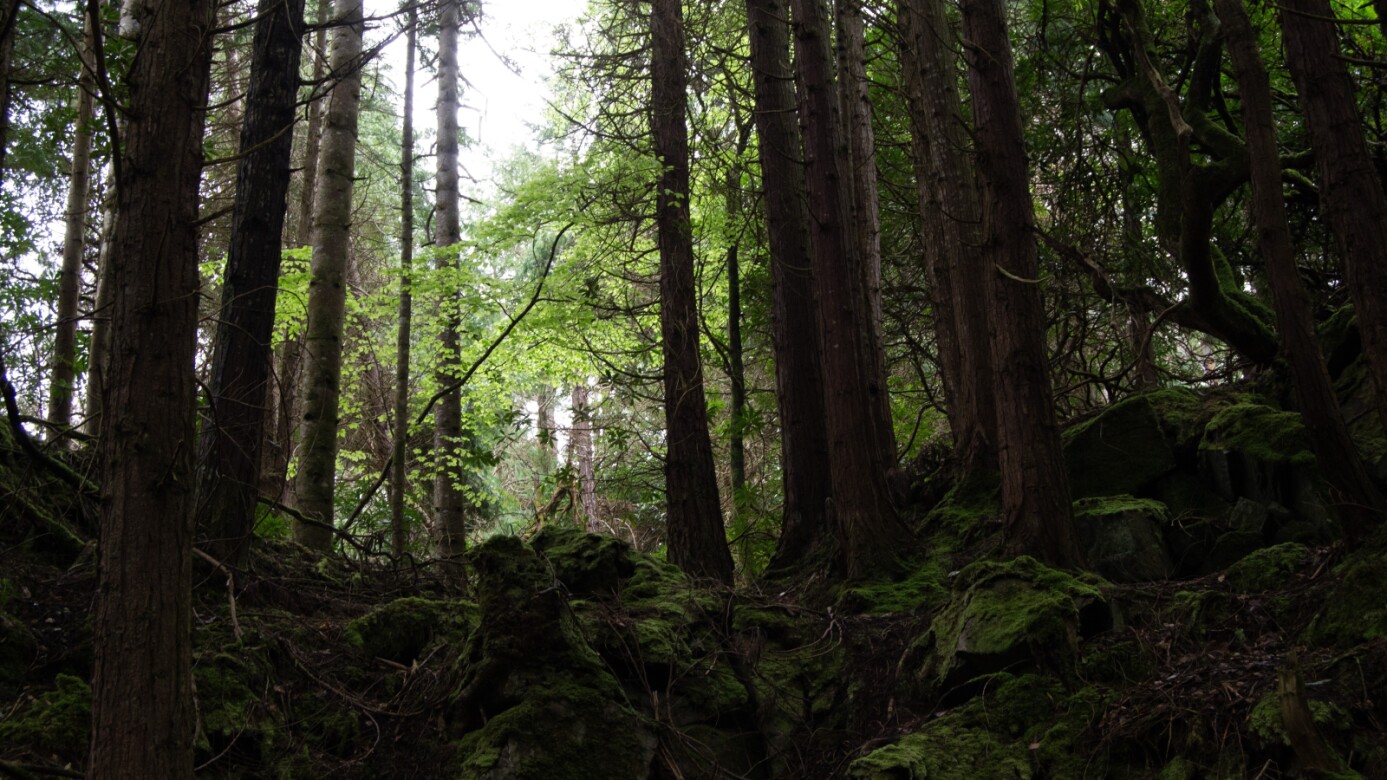
The natural habitat of the western uplands of Ireland are the temperate rainforests. These are dense ecosystems of rich and diverse trees, shrubs, ferns, mosses, and lichens. They have undergone a decline for centuries since the introduction of humans and animal grazers to the country, but some areas still remain.
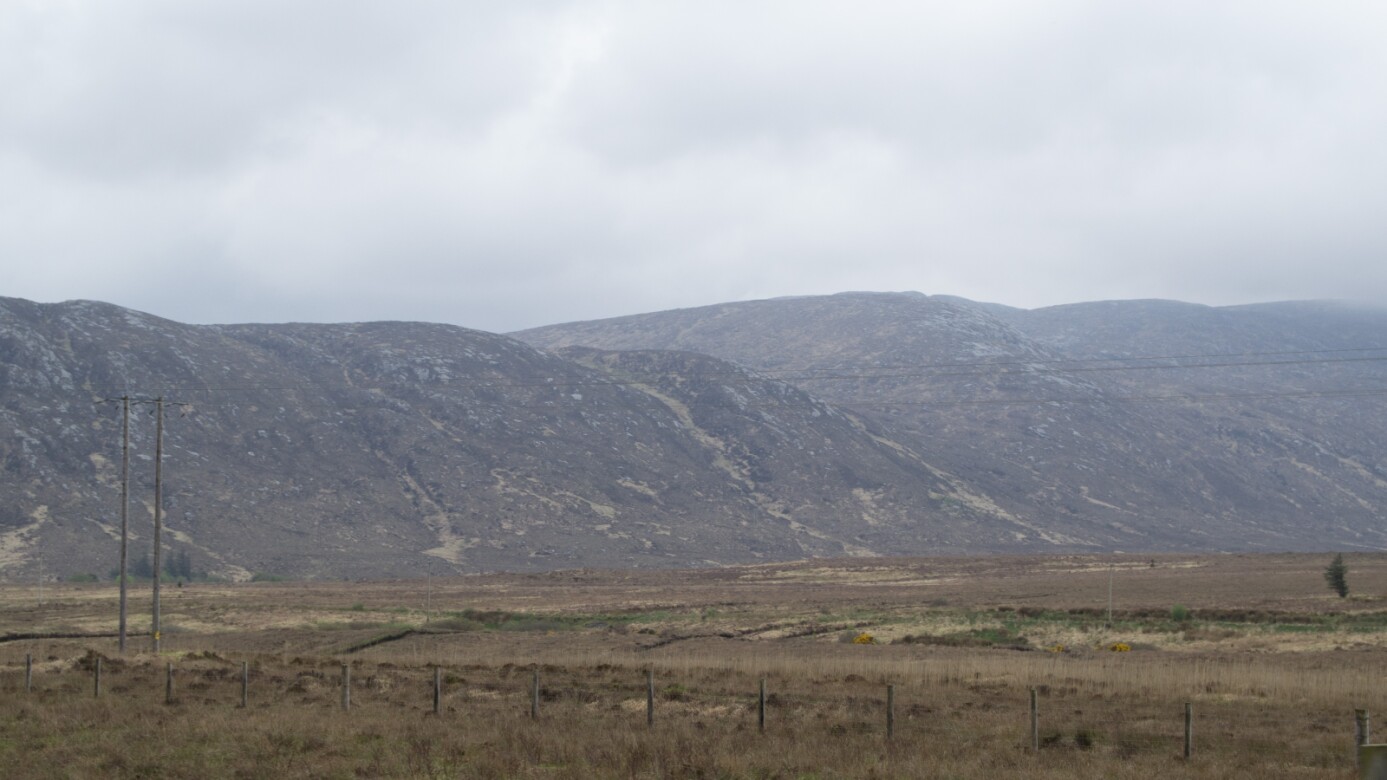
This project seeks to promote the awareness and understanding of these threatened habitats, highlighting how rich, dense, and entangled they are compared to the biological deserts that have overtaken the rest of the country.
‘Experiencing firsthand how rich nature can be in Ireland, means that now, virtually everywhere else I look, I see only empty, biological deserts. From one end of the island to the other, we have turned Ireland into one big farm, predominantly filled with cattle, sheep, or tree plantations.’
Eoghan Daltun
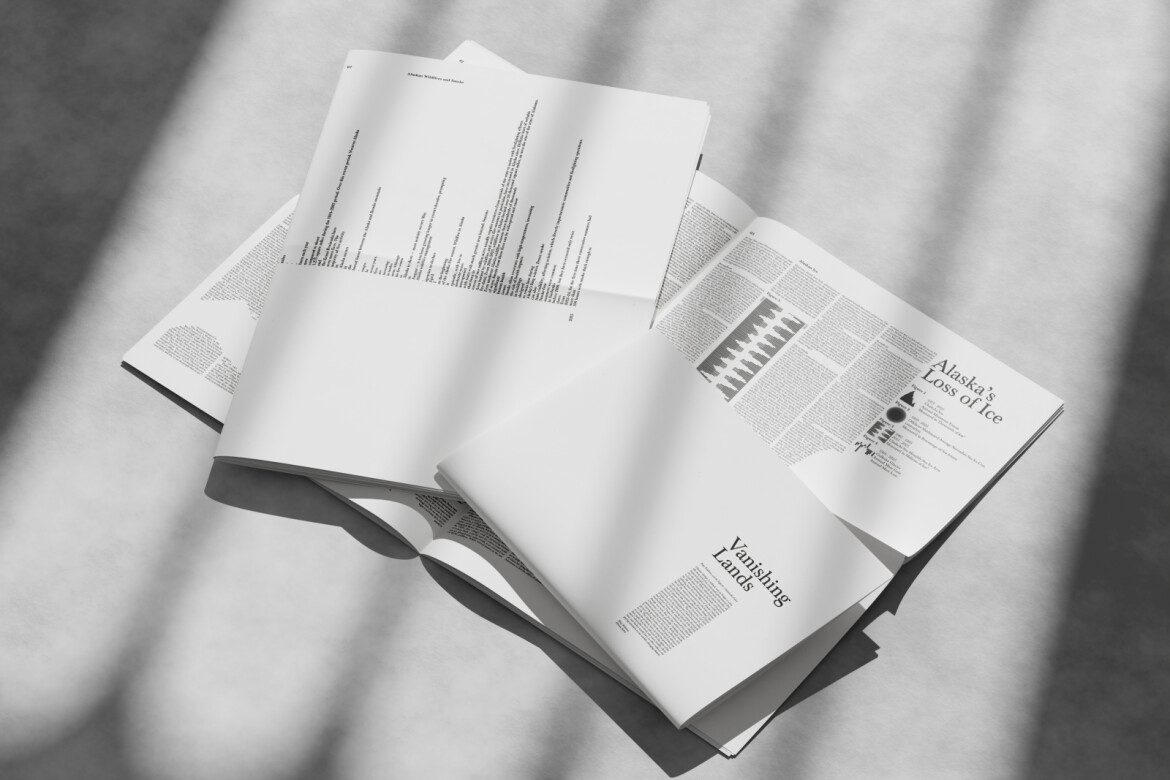
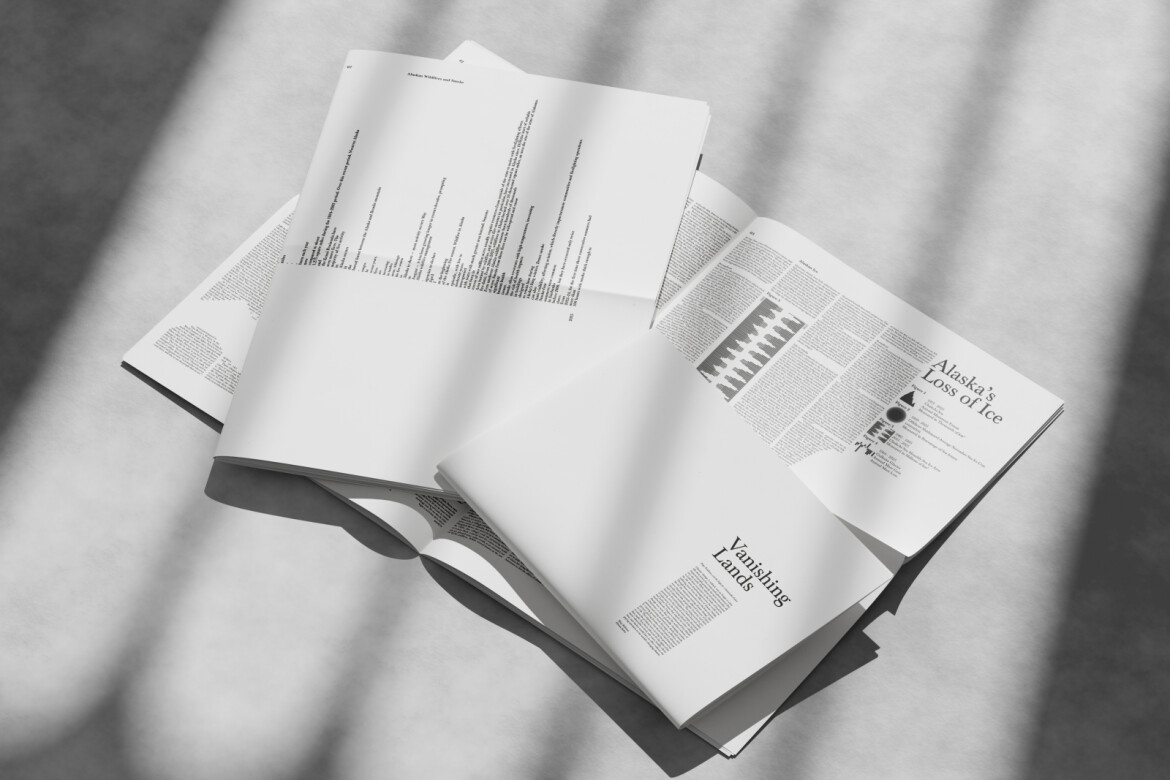
Vanishing Lands
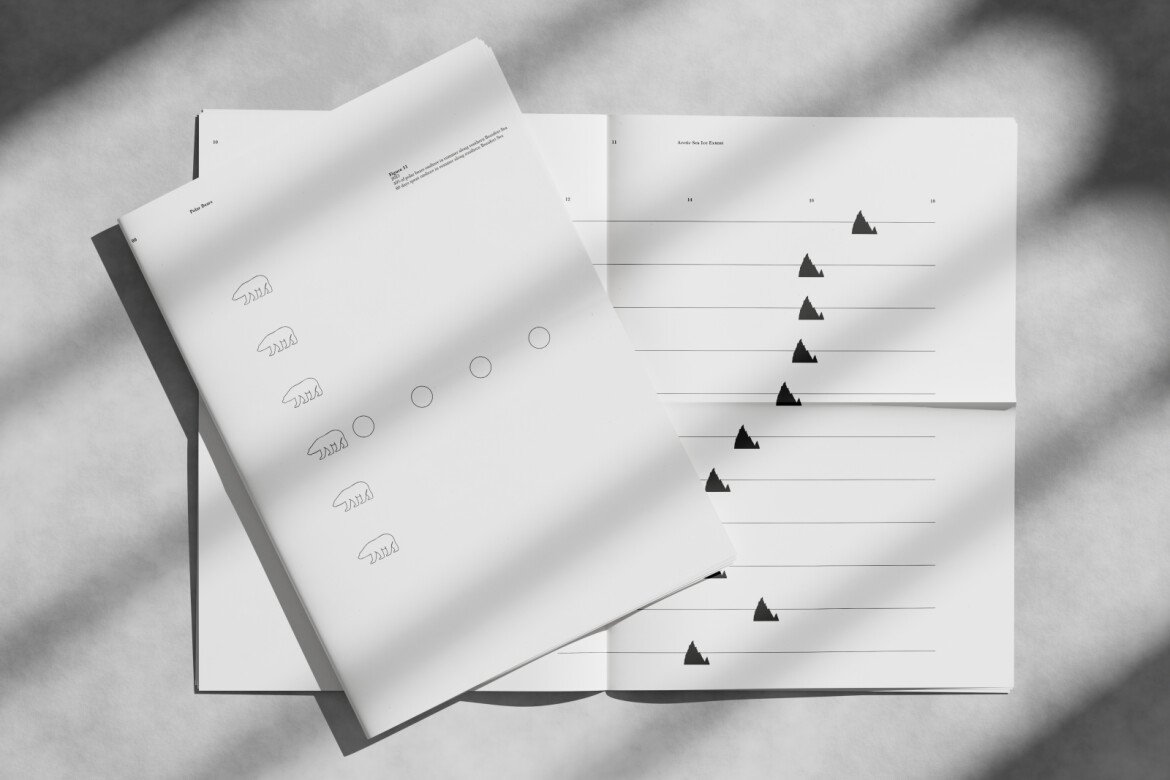
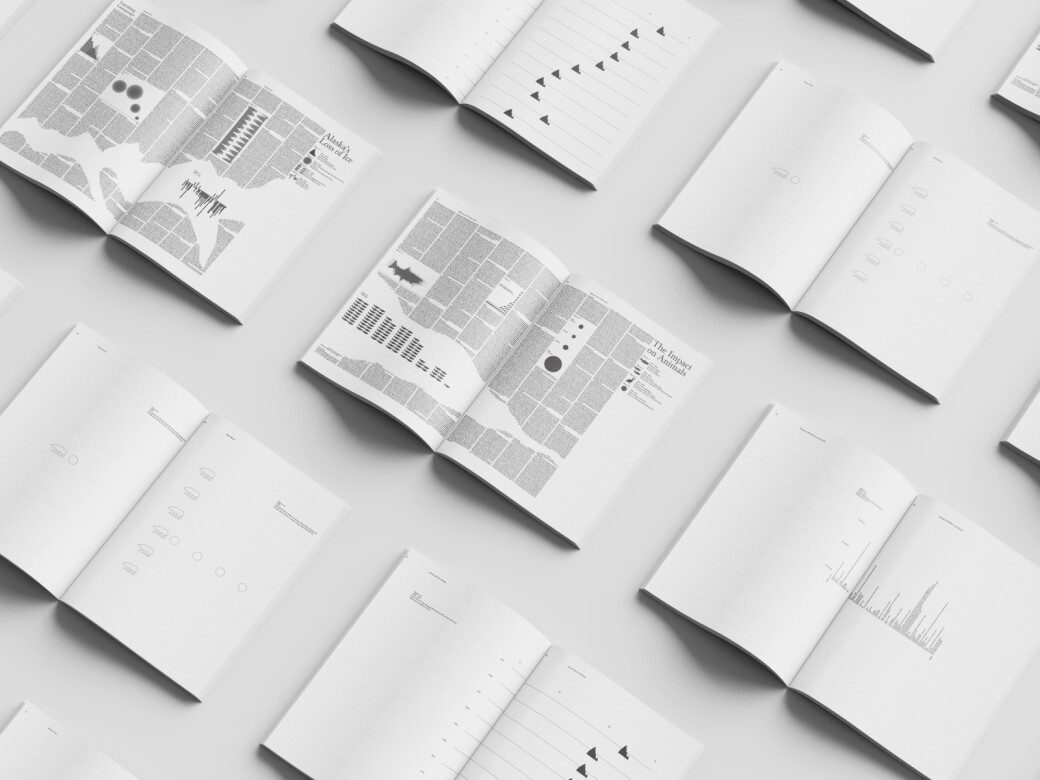
This project explores the imbalance between grassroots communities and the global systems that contribute to climate change. Focusing on Indigenous communities in Alaska, it draws from Vanishing Language, Vanishing Lands and highlights how those most affected by environmental collapse often have the least power to prevent it. Through testimonies describing disappearing ice, disrupted wildlife patterns, and changing weather conditions, the work foregrounds the lived experience behind climate statistics.
The publication combines dense editorial content with infographic isotypes to encourage engagement with complex and often overlooked information. Visual motifs of glaciers, fish, and environmental decline act as entry points into the testimonies, creating curiosity before revealing the severity of the crisis. A deliberately misleading graph is also included to critique how statistics can be manipulated through design and framing. Presented in a broadsheet format, the project aims to balance emotional storytelling with critical visual communication, encouraging audiences to question misinformation while remaining hopeful about the possibility for change.